Black Mold?
Don't Take Chances! Call the Top Black
Removal Company in Kennesaw and get cleaned up FAST!



Why Choose Us?
- Certified Pros
- Available 24/7/365
- Rapid Response
- Fully Licensed And Insured
- We Work With Your Insurance Company
Call Now (770) 215-2210
Professional Mold Removal in Kennesaw, Georgia
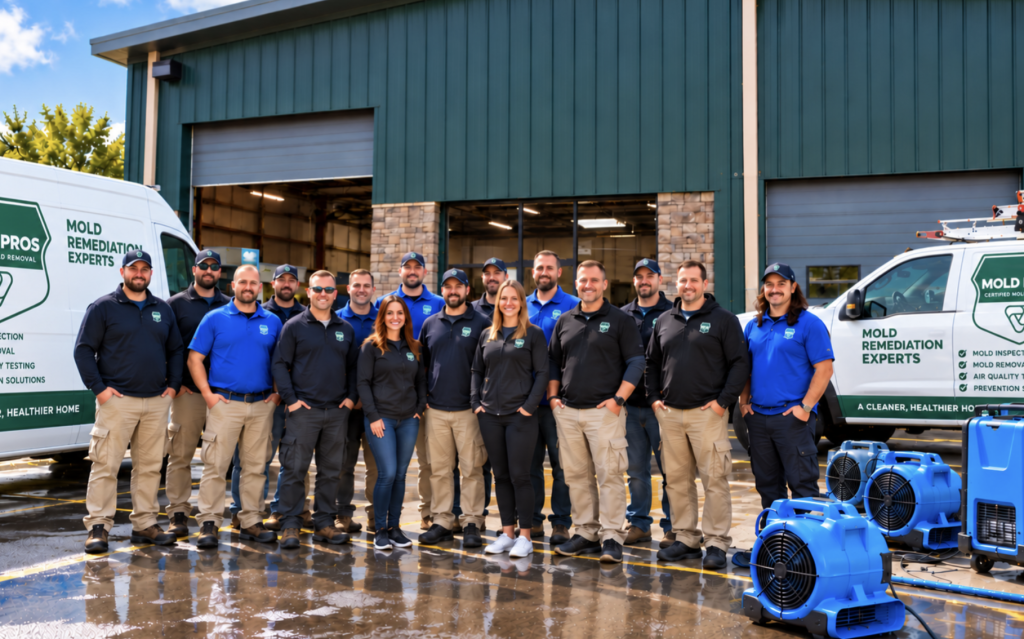
Finding mold in your home or business can raise questions about safety, damage, and what happens next. Our team at Kennesaw Mold Remediation Pros focuses on removing affected materials, cleaning suitable surfaces, and controlling the moisture source. We use containment and HEPA filtration to help keep mold dust from spreading into clean areas. The work plan changes with the material, affected area, and source of moisture. This page explains what our mold removal process includes and where our work ends.
What happens during mold removal?
We begin by reviewing what you noticed and looking for visible moisture conditions around the affected area. That review helps identify whether the problem involves drywall, flooring, insulation, framing, an attic, or a crawl space. We also look for active leaks, condensation, poor ventilation, or other conditions that could support recurrence. Mold removal is not complete if the moisture source remains active.
Before disturbing affected materials, we plan the work area and protect nearby surfaces. Containment means using plastic walls or barriers to limit movement of mold dust. We use personal protective equipment and HEPA air filtration during work that could release particles. A HEPA air scrubber filters mold dust from the air while the work area is cleaned.
Porous materials often need careful removal when mold has entered their fibers or backing. Drywall, carpet, insulation, and some subflooring can absorb water and hold contamination below the visible surface. Hard surfaces such as concrete, tile, metal, and some framing may be cleaned when their condition allows. We do not treat a quick surface wipe as a complete solution when materials remain wet or damaged.
Attics and crawl spaces require special attention because airflow, access, and moisture patterns differ from finished rooms. In Kennesaw, high warm-season humidity makes crawl-space moisture and condensation important conditions to check. Exposed soil, missing vapor barriers, poor drainage, and limited airflow can keep joists and subfloors damp. Attic ventilation problems can also leave roof sheathing wet, especially when bathroom or dryer vents discharge into the attic.
What’s Included
Our mold remediation work centers on controlled removal and cleaning within the affected area. The exact scope is based on visible conditions, materials, access, and the source of moisture. We explain the work area before starting so you know which surfaces are involved. Common parts of the process include the following:
- Work-area containment and protection of nearby unaffected surfaces.
- HEPA air filtration, appropriate protective equipment, and controlled handling of affected debris.
- Removal of damaged porous materials and cleaning of suitable hard surfaces.
Source control is also part of a useful remediation plan. That might involve addressing a plumbing leak, HVAC condensate problem, bathroom ventilation issue, roof leak, or rain entry before final cleaning. We look at the building condition rather than treating mold as an isolated stain. If the moisture source is outside our scope, we explain what must be corrected before the area can stay dry.
Residential work often involves a bathroom, bedroom, kitchen, crawl space, attic, or laundry area. Commercial projects may involve offices, apartments, condos, schools, churches, medical facilities, retail properties, or industrial spaces. Larger buildings require attention to occupants, access routes, shared walls, and operating schedules. The same containment principles apply, but the work area and coordination needs are different.
What’s Not Included
Our mold removal service does not automatically include rebuilding finished spaces after affected materials are removed. Replacement drywall, painting, flooring installation, framing repair, cabinetry, and other reconstruction work require a separate scope when needed. We also do not promise to correct a roof, plumbing system, drainage system, or HVAC system unless that work is specifically arranged. The property owner should have those building repairs completed so the cleaned area stays dry.
- Full reconstruction or cosmetic finishing after demolition.
- Structural engineering or repair of damaged building systems.
- Independent mold testing or laboratory identification.
We do not perform mold testing, and color alone does not identify a mold species. People commonly call dark growth “black mold,” but appearance cannot confirm its type or health risk. Independent testing or assessment can help when the extent or type of a problem needs separate documentation. Visit our warning signs page for more guidance about testing questions, discovery, and immediate steps.
How do different materials affect the work?
Material type affects whether cleaning is useful or removal is safer. Drywall and insulation are porous, so moisture and growth can extend behind the visible area. Carpet and pad can hold moisture near the floor and may need removal after a leak or overflow. Subflooring and framing require closer evaluation because they can remain damp beneath finished surfaces.
Concrete and tile are less absorbent, but their joints, cracks, adhesives, and nearby porous materials still matter. A hard surface may be cleanable when it is sound and accessible. Wood framing may require detailed cleaning and drying rather than automatic removal. We avoid assuming that every material should be discarded or that every visible spot can be wiped away.
Crawl spaces often involve more than one moisture driver. Rain runoff, poor grading, plumbing leaks, and high humidity can affect the same area. A short downspout or clogged gutter can direct water toward a foundation after a heavy Kennesaw storm. Checking the surrounding drainage helps explain why mold returned after an earlier cleanup.
What should Kennesaw property owners check after heavy rain?
After heavy rain, check for new staining, damp odors, wet flooring, and water near exterior walls. Properties near streams, drainage channels, or low-lying roads need property-level review rather than assumptions based only on flood-zone maps. The City of Kennesaw Public Works and Stormwater resources provide information about public drainage concerns and stormwater infrastructure. Georgia floodplain resources can also help owners review official flood-risk information for a specific address.
Inside the building, inspect ceilings below roof areas, walls around windows and doors, crawl spaces, and rooms near plumbing. Do not paint over a damp or discolored surface because paint can hide continuing moisture. If water is still entering, stop the source when it is safe and avoid disturbing damaged materials. Photographing the area and recording when the moisture appeared can help organize the next inspection.
Kennesaw includes newer residential construction, older buildings, townhomes, multifamily properties, and commercial spaces. Construction details differ, so access and drying needs differ as well. Historic or older buildings may have concealed cavities around windows, walls, and floors. A commercial property also needs a plan for employees, customers, tenants, and shared air or access paths.
How long does mold removal take?
There is no reliable single timeline for every mold removal project. A small, accessible area with limited material damage usually requires less work than a crawl space, attic, or multi-room project. Hidden moisture, demolition needs, drying, and the size of the containment area all affect the schedule. We explain the expected sequence after reviewing the conditions.
Occupants do not automatically need to leave for every project. The decision depends on the work area, containment plan, building use, affected materials, and the needs of people in the property. Children, older adults, and people with health concerns should discuss exposure questions with a doctor. Businesses and multifamily properties may need extra coordination to keep unaffected areas operating safely.
Credentials and project expectations
Our team is IICRC certified, which reflects training aligned with recognized cleaning and restoration practices. We are also in good standing with the BBB. These credentials do not replace a property-specific evaluation or guarantee that every material can be saved. They support a work process built around containment, controlled removal, cleaning, and moisture correction.
Before work begins, we identify the affected areas and discuss access, materials, and visible moisture conditions. We do not offer a final price without reviewing the property and defining the work scope. Actual mold remediation costs vary based on affected materials, work-area size, containment needs, access, and the moisture source. An inspection is needed before a final scope and price can be provided.
If you see active water, shut off the source when it is safe and keep people away from damaged materials. Then call (770) 215-2210 to discuss what you found and where it is located. We will explain what information helps us understand the situation before arranging the next step. We will also discuss whether the area should remain undisturbed until the moisture and affected materials are reviewed.
Frequently Asked Questions
Can you remove mold from drywall and insulation?
Drywall and insulation are porous materials that often hold moisture and growth below the surface. Affected sections may need controlled removal rather than surface cleaning. The amount removed depends on the visible area, moisture path, access, and condition of the material. We protect nearby areas and use HEPA filtration during removal work.
Do you remove what people call black mold?
We address visible mold growth based on the affected material and moisture condition. Dark color does not identify a species, so we do not diagnose mold by appearance. People commonly use the term “black mold,” but color alone cannot confirm what is present. Independent testing can provide separate documentation when identification is needed.
Can I stay in the property during remediation?
Some limited projects allow occupants to remain outside the contained work area. Larger projects, active moisture, extensive material removal, and commercial operations require more planning. The decision depends on the scope, containment, access, and the needs of people using the building. Anyone with health concerns should ask a medical professional about exposure questions.
Will mold return after cleanup?
Mold can return when materials stay damp or a leak remains unresolved. Common causes include high indoor humidity, plumbing leaks, HVAC condensate problems, poor bathroom ventilation, and rain entering through the building envelope. Crawl-space drainage and missing vapor barriers also deserve attention in humid Kennesaw conditions. Keeping the area dry and correcting the moisture source are essential parts of preventing recurrence.